Sensing the path ahead
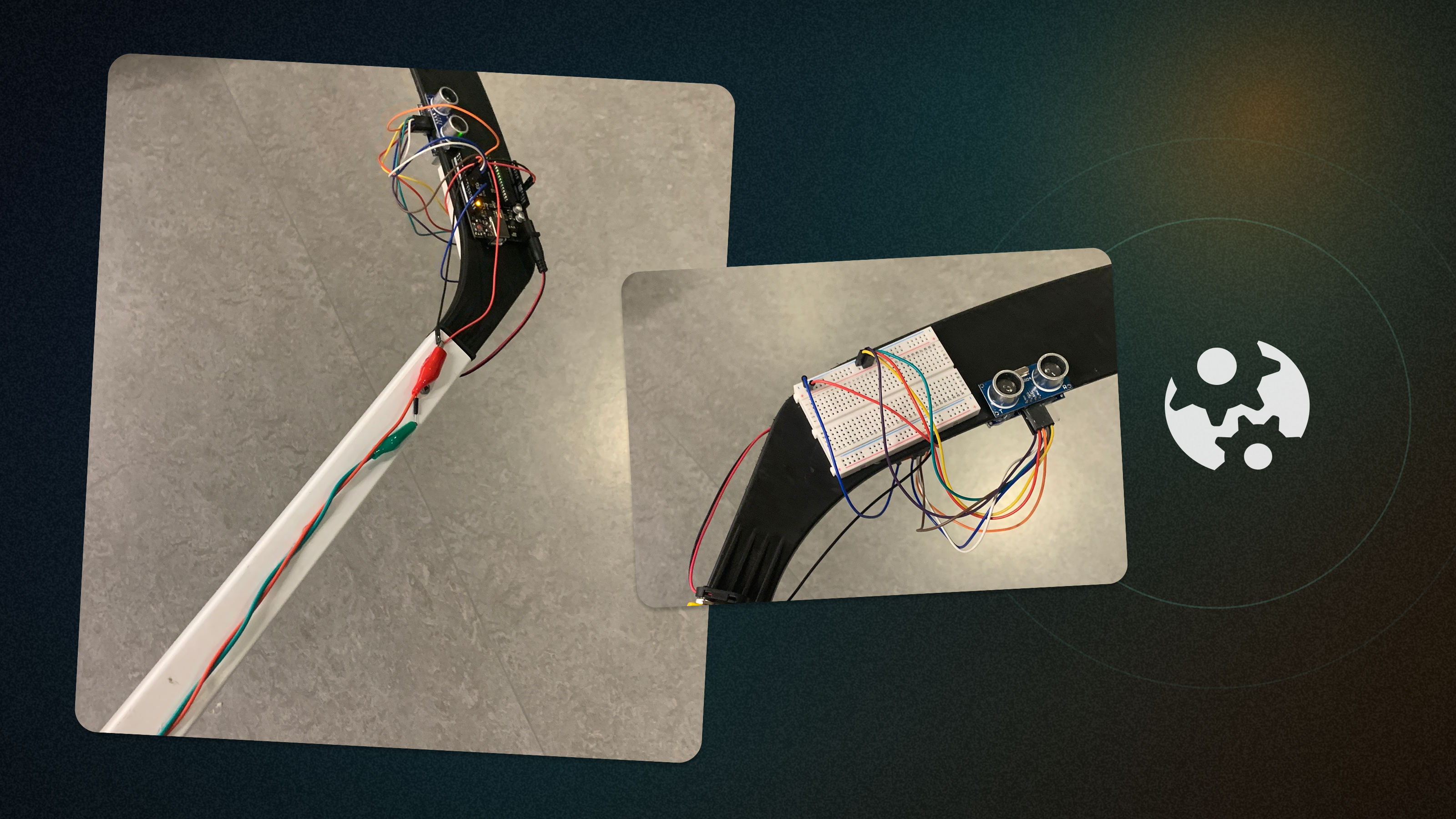
We mounted ultrasonic sensors on the cane and connected them to an Arduino running the distance-measurement logic in C++. Sensor placement mattered as much as the threshold in code, because a reading from the wrong angle could catch the floor or miss an obstacle that sat slightly outside the narrowest part of the beam.
The output provided a quick warning when an object entered the selected range. We tuned that range through repeated passes around the prototype, watching for warnings that arrived too late and false triggers that would make the feedback difficult to trust.
Working within the hackathon
Because we had one weekend, we kept the electronics accessible and tested each sensor before mounting it to the cane. We added the warning behaviour after the distance readings were stable, which made it easier to tell whether a bad reading came from the wiring, the Arduino code, or the angle of the mounted sensor.
By the end of the hackathon, we had a working physical prototype, a recorded demonstration, and a Devpost submission explaining the intended use. The cane could detect an obstacle in front of it and trigger the warning consistently enough for the demo, while the mounting, feedback design, and long-term reliability still needed much more work.
What the prototype clarified
We proved that the sensing and warning loop could run on the cane, although we had not tested whether the feedback was comfortable or useful for a visually impaired person. A practical version would need testing with users, more deliberate feedback patterns, weather-resistant packaging, battery monitoring, and a mount that does not interfere with normal cane use.
The next version would start with user testing before changing the hardware because range, sensor placement, and warning timing all depend on how someone moves the cane. Longer hardware tests would follow that movement during normal use, with the bench setup reserved for isolating sensor and wiring problems.